Pages

Showing posts with label Japanese Life. Show all posts

Wednesday, 16 February 2011

One Piece of Greatest

One Piece
(Eiichiro Oda, 1997-Present)

5 Stars


I’ve been in Japan for not far less than two years now, and despite my best efforts to maintain utter oblivion to the world of Manga, it was inevitable that eventually it was going to get me. Being unable to pop down to a comic store that sells anything in English, or tune into the Disney channel on an evening, I have been somewhat Jonesing for my X-men and Kim Possible fixes.

And so, after some gentle nudging from Manami, and a rather groovy collection of freebie key-chains from the 7/11, I found myself more and more intrigued by Eiichiro Oda’s pirate themed adventure, One Piece.

Following the exploits of young elasticated hero Monkey D. Luffy and his crew of unlikely miscreants as he endeavours to become king of the pirates, One Piece is a fantabulously fun franchise that has spread from comic, to TV, and even to a series of feature-length movies.

A cast of bizarre and endearing characters, ranging from anthropomorphic reindeer doctor Tony Tony Chopper and skeletal musician Brooke, to chain-smoking dandy chef Sanji (my own personal favourite) compliment engaging and exciting stories, that although read with vigour in the manga, do have a tendency to occasionally run a little long in the televised version – when one battle lasts for ten episodes, it is something of an overkill.

For me, however, the great selling point of the series is not simply the stellar cast, nor the award-winning flashbacks that constitute a major portion of the tale, but Oda’s brilliant artwork, bringing each character to life in their own individual style, complimenting each persona in inimitable charm.
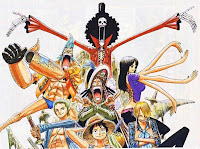
Amidst a crazed culture of animation that verges from the most disturbing hentai to the overly cutesy, One Piece is certainly one piece of art that manages to walk that fine plank between annoying and disturbing, bringing to light a sexy, saucy and all-round awesome adventure in animation. With a plethora of books, cuddly toys, socks, action figures, and even a themed restaurant in Tokyo’s Ginza district, One Piece is piratey fun to keep you Going Merry.

Wednesday, 3 November 2010

Why I Think the Japanese are in fact Mogwai

I’ve been in Japan a while now, getting to know the people, the customs, and the outright craziness of the whole thing, and, after many months of speculation, I have come to one simple conclusion; the Japanese people are in fact Mogwai.

Now, this may come as something of an odd claim to make for anyone not accustomed to life in Japan; How can a race of peoples, with centuries-old traditions be akin to an animatronic creature created by Joe Dante back in the nineteen-eighties?

Well, dear reader, cast your mind back to the three simple rules, and indeed the character of that oh-so-lovable young scamp Gizmo, and I’m sure, after my little analysis, you too will see the East through Gremlin-fied eyes.

Rule One: Keep them out of bright light, especially sunlight; they hate it

When summer rolls around in Japan, a very peculiar thing happens. Unlike the rest of the world, where folk tear off clothing to soak up the sun, Japanese women actually cover up to save themselves from being exposed to any form of natural light. So much so is this obsessive protection, that it is not uncommon to see women clad from top to toe in thick black clothing, sweating in the sweltering heat, just to maintain that “white” appearance.

Rule Two: Don’t get them wet

On my first day in Tokyo, I saw one of the most amazing sights of my life. As I was crossing the infamous Shibuya roadway (a fantastic sight in itself), the slightest rain began to fall. Nothing to an Englishman, so very used to the occasional downpour. As such, it was with utter bemusement that out of nowhere, a thousand umbrellas opened up, forming a goliath shelter lest one single drop should fall on the locals’ heads.

Since this first display, I have become more than used to a bevy of umbrellas in even the trickliest of showers.

Rule Three: Don’t feed them after midnight

This is perhaps one that I would not be aware of were I not spending the vast majority of my time living with a delightful young Japanese lady, and something that I must admit I do, on occasion, find somewhat irksome.

Whereas in the West a midnight tummy-rumble is to be quenched with the eponymous timely snack, out here it is utterly forbidden to eat after the clock strikes twelve. Don’t ask me why, as I am yet to find a suitable explanation, and quite frankly, I am still going to have my biscuits at two in the morning, rules or no rules.

Of course, it’s not just these rules that have turned me to my way of thinking; there are many other attributes of Japanese peoples that liken them to their Mogwai brethren…

A love for cutesiness and all things Disney

Remember that scene in the first movie when the gremlins storm the movie theatre and sing along to Snow White? Well, that love of all things twee emanates in every aspect of Japanese life. One cannot buy a detergent without some bizarre anime creature grinning inanely, and clothing here ranges from the cute to the down-right daft.

The obsession with Disney is also somewhat bizarre, with kids sporting bags with characters from movies they have never even heard of, let alone seen (seriously, right now EVERYONE has Jack Skellington stuff going on, and I know for a fact a minute percentage has ever actually sat through Nightmare) and waving around their Duffy the Disney Bear merchandise.

Singing

Gizmo loved to sing. Everyone remembers that. And the Japanese are the same. Karaoke bars and boxes litter the streets, and one cannot move more than ten metres down a city road without being festooned with fliers for some neon music-based establishment.

So if your air conditioner goes on the fritz, or your washing machine blows up, or your video recorder conks out, before you call the repairman, turn on all the lights, check all the closets and cupboards, look under all the beds, because you never can tell; there just might be a Japanese person in your house…

Tuesday, 24 August 2010

10 Things I Miss About You

Living in Japan isn’t always easy. That’s one of the main reasons I keep this blog; it grounds me, keeps me in touch with the me that sits somewhere in stasis, waiting to get back to the UK and do that fabled PhD in Film and TV before becoming a delightfully stuffy lecturer.

Funny thing is, I usually start a project like this and soon get bored. In fact, this is my third blog; the first one was started back when I was directing Return to the Forbidden Planet at university. The second was just after I arrived in Japan, and was supposed to be a journal of life in Japan. Problem was, simply detailing my thoughts didn’t do it for me. That’s how this malarkey came about. I decided to concentrate my writing on things I love; film and TV, obviously, as well as those wonderful chocolate snacks I love so well, and the bizarre wildlife that finds itself knocking at my door in this crazy country. Oh, and this crazy country in general.

And so, to celebrate 100 posts, I decided to look at the things I miss. The things I moan about, and bore most people to high hell therein. Naturally, the real top of the list is my friends and my family. You all know who you are, so I don’t need to list you here. But love to you all nonetheless.

No, here are the ten things that I miss on a daily basis; the ten things that really separate Japan, as a way of life, from my English roots. Some of them are obvious, and indeed most of them are food related, but these are the things that at least once a week, I find myself wishing I could give my right arm for…

10. Doorways

Japanese people are small. It’s a fact. As such, doors here are much lower than the two metres one comes to expect in British houses. Much, much lower. A train ride will often result in a mild concussion when entering or exiting the vehicle, whilst a midnight trip to the lavatory will usually result in you spending the rest of the night passed out on the bathroom floor. Doors either need to be taller, or crash helmets should be given free with every Gaijin card.

9. Baths

Bathing in Japan is a bizarre peculiarity. Tradition dictates that in the average Japanese household, a bath is run in the strange, small tub (approximately one metre in length), and then each member of the family takes a bath in the same water, starting with the father, then working through the rest of the family in order of seniority (note that in Japanese society, the mother is the least important member of the house, and therefore she takes her bath last, after EVERYONE else). This water is also often kept for days and thus reused a number of times.

Of course, this isn’t the issue for me. My issue is the metre-long excuse for a bathtub. I like baths, and quite frankly, if I want to relax, I want to be able to spread out when I do so. Being squashed up like a tied turkey is not my idea of R&R.

8. Individuality and Variety

For anyone who hasn’t actually been to Japan, it will come as a surprise that the Harajuku craziness and game-show zaniness is actually nothing like real life here. Everyday life in Japan is standardised; everything must be the same. People think what they are told to think, dress how society dictates, and act how everyone expects them to act. Cars here are uniformly black, silver or white, and kids read the same comics and listen to the same music as each and every one of their peers. There is no sense of rebellion or revolution here, and, when compared with the rainbow of different creeds, cultures and cliques of the West, life in Japan is, quite honestly, bloody boring at times.

7. Empire Magazine

I’ve been reading Empire for a fair few years now. As a film addict, it’s somewhat of a necessity. My monthly fix of what to expect from cinema over the next age is almost as vital to me as the films themselves. Often moreso. Some would argue “well why not just read the website?”. The answer is a simple case of tangibility. You can’t flick through a website and stumble across a gem. You can’t leaf through a website whilst taking your morning constitutional. Right now, I have next to no idea what’s going on in the film world, and as great as Empire Online is, and indeed the wonder of IMDB, they will never substitute for the real thing.

6. Being Able to Read

One of the most fundamental aspects of language is the ability to read; allowing you to know what you’re buying, to know where you’re going, or even to just know what the building you’re about to enter actually is. Unfortunately, Japanese does not share our “Romanji” alphabet. Indeed it does not have an alphabet. It has three. One of which consists of tens of thousands of symbols. At this point in time, I have mastered one of these systems. It’s better than nothing, and at least allows me to read menus, but nonetheless, I so very often find myself missing that instant, precognitive recognition that happens as you walk down a British street. And being able to find sugar without spending ten minutes deciphering each and every sign above the supermarket aisles.

5. Wine

It will probably come as some surprise to a lot of people that this isn’t higher up the list. I like wine. A lot. Sometimes too much. And these days, it ails me to find myself in a restaurant to be offered the choice of “red” or “white”, both of which will inevitably taste like old vinegar with a dash of grape juice. Coupled with a hot bath, a glass of wine is the key to my relaxation. It’s no wonder I’m so ruddy tense of late.

4. Marks and Spencer Simply Food

As the top two spots on this list clearly point out, I really miss food, and the one purveyor of fine dining that truly makes me salivate at every thought is M&S. Back in my Cardiff days, I would, on a weekly basis, spend a small fortune on silly flippancies that were, quite frankly, the best damn food that you can get from a high street shop. I miss the variety, the treats, and the amazing ready meals. And now I’m bloody hungry. Did I mention how sick of rice I am?

3. Idle Chit-Chat

An interesting factor of daily life, and indeed one that you really don’t notice until it’s gone, is the amount of information that you take in each day via osmosis. Be it the radio in the background, people nattering next to you on the bus, or simply the people you pass on the street, in a country of your native tongue, you cannot escape overhearing things. Take that away however, and you find yourself utterly seprated from the rest of the crowd; there’s no overhearing a joke in the pub, there’s no general niceties to your local shop-keep, and there’s none of that harmless flirting with the waitress. You’ll never realise how much you miss the simple ability to share a conversation until it’s taken away from you.

2. Cheese

When I was at school, I campaigned to make cheese one of the major food groups. I love cheese that much. As such, to find myself in a country that considers cheese to be either Kraft “Camembert”, or those hideous plastic slices, I am in somewhat of a quandary when it comes to comfort food. I miss cheddar; I miss Gouda, I miss Bavarian smoked. I’d even settle right now for some No Frills “cheese”. Cheese is a joy, and right now even a Baby Bel could bring a tear to my eye.

1. Sausages

Since I can remember, sausages have always been my favourite food. I fondly recall a holiday to Jersey when I was about five, when after the fourth night, the waitress at the hotel didn’t even bother to take my order. Back home, I could easily live off a different variety of sausage each day; whether it be Cumberland, pork and leek, or, one that rapidly took top position whilst working in Cardiff, Welsh Dragon. Sausages are robust and delicious in a plethora of different dishes.

And so, to be in a country where a “sausage” is either a gristly penis-like monstrosity or a half-assed American wiener, I am often utterly at a loss. What I would give for toad in the hole or sausage casserole. Or even just a couple of them between brown bread (something else that doesn’t exist here unless you want to pay about a fiver for four slices).

Speaking to fellow Englishmen, the sausage does indeed top most lists. The humble British sausage. The world needs to know of its greatness. Alas, doesn’t look like it’s going to happen anytime soon… Guess I’ll just wait for two weeks of sausage fest at Christmas.

Wait that came out wrong…

Friday, 30 July 2010

Learning Japanese with Takeshi Kitano

Learning Japanese is no easy feat. Let no-one ever tell you it is. Having learned French from an early age, and been enchanted by Latin from seven, I’ve always had a fascination with language. Japanese, however, is a whole different kettle of sushi.

With no root language even remotely similar to our Roman ancestry, Japanese is not only alien to look at, with its three different alphabet systems, but also entirely unique in its grammar, phonics and just about every other aspect of communicative linguistics. As such, despite having been submerged in this country for a year now, I still struggle past even the most basic of communications.

That said, I’m coming along. At a recent teachers’ seminar, someone brought up the concept of “Recall and Recognition”, wherein the first stage of learning a language is being able to understand what is going on. Whether or not one can take an active part in a conversation is not important, it’s the fact that the content of said conversation is understood. Naturally, knowing roughly what the subject is to start with is always helpful…

So, today, with the theory of R&R in mind, I decided to visit a film that I know relatively well; Kinji Fukasaku’s infamous political thriller and general blood-fest, Battle Royale.

Having seen the film twice before, and ravenously devouring the book earlier this year, BR is a tale I’m familiar with, and probably my favourite Japanese film to date. And so, an adventure. A test, if you will.

Battle Royale, without subtitles.


Battle Royale
(Kinji Fukasaku, 2000)

4.5 Stars


Based on perhaps Japan’s most notorious book of all time, Kinji Fukasaku’s film version of Koushun Takami’s 1999 tome Battle Royale seems to be one of those marmite movies… You either love it, or you hate it. The hate, however, seems not to stem from the film itself, but the concept; in a dystopian near-future, the Japanese government have turned to extreme measures in an attempt to control their rebellious students. The BR Act dictates that one class of high school students shall fight to the death each year, thus eliminating rowdy students and acting as a deterrent for subsequent classes.

It’s a twisted concept on paper, and even watching the film, and having read the book, it’s one that’s difficult to comprehend the reasons behind. It is, nonetheless, one of the most shocking and disturbing ideas for a story that one could come up with. I remember fondly the moment I first realised the impact of this movie; watching, for the first time, the scene in which the forty school-kids are told that they must kill their nearest and dearest friends if they wish to survive the next seventy-two hours. Told via a grinning TV presenter, this is truly one of the most nauseating and thought-provoking scenes I have ever come across.

Following heroes Nanahara (played with just the right amount of annoying whininess by Tatsuya Fujiwara) and Noriko (Aki Maeda) as they attempt to survive the program, we are introduced to an array of supporting characters, most of whom unfortunately don’t get enough screen time to explore their intricate stories outlined in the book. Instead, Fukasaku concentrates on the major arcs from the book, portraying them well and, for the most part, with deliciously shocking effect. Most notably, the infamous “lighthouse” scene, in which the true effects of the Programme are shown; distrust, betrayal, and inevitably, bloody, bloody death.

The acting is top notch throughout; Taro Yamamoto is wonderful as the rugged and world-weary Shogo Kawada, whilst Masanobu Ando is maniacally malicious as cold-blooded killer Kazuo Kiriyama. Alas, his death is rather anti-climactic.

The star of the show, however, is the legendary Takeshi Kitano, who not only adds an element of the blackest comedy to an otherwise bleak tale, but also brings an uncomfortable tenderness to a character that could have easily been played as a simple bastard.

Perhaps my only gripe with the film is the pretentious poems which follow the majority of the deaths. Displayed across the screen, these do little more than detract from what’s actually going on within the movie.

Beautifully shot in some fantastic locations, and with a score of perfectly chosen classical instrumentations, Battle Royale is truly a masterpiece of Asian cinema, and indeed of cinema itself. The haters, in my opinion, don’t hate it for the craft, they hate it for the content.

And did I understand it?

Let’s just say I’m glad I’ve seen it before…

Tuesday, 8 June 2010

Going Gaga - The Language of Animals in Japan

We’ve all grown up learning the sounds of familiar farmyard animals. Whether we are country folk or city kids, we all know that a cow says “moo” and a sheep says “baa”. It’s Sesame Street stuff really. Knowledge that we acquire at an early age, often before more mandatory things like the alphabet or numbers past five. Well, I did anyways.

Of course as we grow older, we are introduced to other languages, and the way that people of different countries hear the world around them. It’s not surprising that a French dog, for example, gives its “woof” with a French accent, eliciting the somewhat haughty “owaff”. Generally speaking though, the animals of Europe all speak with the same dialect. I mean, just look at The Aristocats; cats just happen to speak with French accents.

Come to Japan however, and it’s not only the people that communicate in a language that’s all too alien to the Western eardrum, but apparently the animal kingdom also has a whole new language to get your head round.

My first experience with the voices of Nipponese beasties was back in Tokyo, not long after I arrived in the country. Being a big fan of pigs (one day, I shall own my own and he shall be known as Pigby, having grand adventures with a duck named Stuart whilst wearing a most fetching monocle), I had a pig shaped key-ring, which led my students to giggle about, crying “boo boo”. Confused, I asked my floor manager on the matter, who explained that pigs here do not say “oink”, as to which I am naturally accustomed, but in fact say “boo boo”. Hmm. And that was just the beginning.

Thereafter, I discovered that a pigeon’s cry is known as a “po-po”, whilst an elephant says “pa-oom” (I’m not actually sure what an elephant says in English. I always figured it was just a “trumpet”) and a frog “geru-geru”. A dog “wan-wan”s and a cow “gwon”s. A rabbit meanwhile, perhaps one of nature’s most non-vocal creatures, apparently says “pyowm-pyowm”.

My favourite however, is the duck. We all know the old saying that a duck’s quack has no echo, right? Well, I thought I had disproved this, as a family of ducks had been splashing about in the river just outside my house a few months ago, with their voices distinctly resonating along the banks. However, turns out ducks here do not quack, but in fact say “ga-ga” (hence the picture… I had an image of them singing the opening lines of “Bad Romance” whilst going about their ducky business), thus keeping the theory intact.

There are exceptions however; a Japanese sheep does say “meh”, and a cat’s purr is a “neow”, which are both pretty close to their English counterparts.

So, next time you’re strolling through the countryside, listening to those all too familiar sounds, spare a thought for the creatures of Japan, whose cries, quite frankly, sound bugger all like the real thing.

Friday, 21 May 2010

Taking The Spice Out Of Curry

CoCo Ichibanya
Yanai City

The Japanese love their curry. If, however, you are expecting the massive variety of sauces and spices, the poppadoms, the naan breads and the chutneys ubiquitous to the UK Friday night fayre, then I am afraid, my friend, that you shall be sorely disappointed. Like every non-native dish, be it hamburgers, pastas, or even the simple omelette, the Japanese have taken curry and transmogrified it into their own unique attempt. Like I said, the Japanese love THEIR curry.

Imagine, if you will, every foodstuff under the sun, each doused in standard chip-shop curry sauce and served with the omnipresent Japanese sticky rice. This is essentially the menu of CoCo Ichi, Japan’s number one curry chain (indeed, the name itself means “here is best”). There is a full range of food items to be covered in the multi-purpose sauce. Perhaps you fancy a cheese curry? Or maybe clams? Hotdogs perhaps? No? Well what about the all too appealing omelette curry?

I must admit, I had the same lukewarm reaction when I was first introduced to CoCo; there mere fact that there was not a bhaji in sight something of a downer. But, after a couple of subsequent visits, I’ve really rather learned to like it. Maybe it’s just the acceptance that a chicken shashlick and a peshwari naan are out of the question, but the always popular “chicken kats caré” (a hand-breaded chicken breast served over rice and sauce) really is quite yum.

I don’t know. I’m rather torn when it comes to my opinion of Japan’s take on curry. On one hand it’s tasty enough, it’s warming, cheap, and one of the few meals that really does fill a hole. On the other hand, it’s a bit crap.

Thursday, 29 April 2010

Japanese Wildlife Part One

One of the most endearing and enduring aspects of Japan, and indeed one of the biggest draws to me as an animal lover is the sheer volume and variety of native flora and fauna that, although often not unique to Japan alone, is so very exotic to European eyes.

An amazing variety of different bugs and beasties seem to show themselves on a daily basis found these parts, and it seems like every week some new creature graces me with its presence. Unfortunately, as is often the case with the local folk, they are utterly oblivious to the rich tapestry of life that is surrounding them, so I have taken it upon myself to chronicle and research as much as I can, garnering what knowledge I can from trusty ol’ Wikipedia.

So, in what shall hopefully become an ongoing series, I shall be sharing some of my more exotic finds. To date, I have seen some of the most beautiful wild animals I have ever come across, and though a few I have failed to capture on film, such as the illusive Itachi (the Japanese pole cat), and many more have as of yet remained in the darkness; the Inushishi (Eurasian wild boar) and the mythical Tanuki (the racoon dog, revered as a spirit of mischief amongst the Shito peoples), I am determined to continue discovering more and more monsters from beyond myth.

Koi Carp

Let’s start with one of Japan’s most famous indigenous species; the prized Koi. Oft seen in the gardens of the rich and frivolous back home, these friendly fishes cost a fortune in the UK, and yet are seen in every river, lake and stream in Japan, swimming around happily, occasionally popping up to the surface to say hello. Inquisitive and smiley, and ranging in colour from a muddy brown to the Technicolor gold and white variety, they never fail to raise a smile with their Fu Man Chu moustaches and gormless expressions.

Imori (House Gecko)

Within my first few days in Yanai, I was amazed to discover just how many of these adorable little lizards there are scurrying about the place, gobbling up all the nastier bugs and generally keeping the place tidy. Though I haven’t seen any over the winter, the summer is now upon us, and ‘tis the time of the season for gecko lovin’. Seen by the Japanese as a friendly house guest, these little lovelies are great pest control and a joy to watch on their nightly patriol.

Ashidakagumo (Huntsman Spider)

Another rather encouraged house guest is the terrifying-looking Huntsman. The size of a dinner plate, there are many horror stories of these chaps hiding under toilet seats and scaring the bejesus out of unsuspecting folk. They are however, harmless to humans, and, along with the house gecko, form an invaluable security team. Just think of the scariest looking club bouncer who still has time to have a chat about the footie.

Zenigame (Red-Eared Slider)

Made famous in the eighties and nineties by that classic cartoon series, this red-masked terrapin is another surprisingly common delight in Yanai. I saw my first one on my first day in the south, and grin with childlike glee ever time one pops his cute little head out of the water since. There’s actually a family that lives in the stream outside my house; my drinking buddies during my morning coffee.

Kama-Kiri (Preying Mantis)

Since reading Durrell’s My Family and Other Animals at a young age, it has seen my dream to see the epic battle ‘tween mantis and gecko. Alas, I haven’t seen such a showdown yet, but the mantis is still one of my favourite beasties of Japan. Mostly nocturnal, these wise looking creatures are hauntingly beautiful; their bulbous eyes and constant meditative mantra emanates a bizarre serenity in which it is surprisingly easy to get lost.

Aburamushi (Japanese House Bat)

I love bats. They are, to me, one of nature’s most amazing creations; their effortless twists and turns and graceful silence is simply breath-taking. Also, they eat moths, so that’s a plus. This little chap comes with a story though. After finishing a very long week at work, I was leaving school, only to discover this fellow sitting on the doorstep of the office. Looking at me with pleading eyes, he had clearly come to me for help after crash landing, knowing that I was perhaps the only person nearby who could aid him in his plight. After ineffectively telling my clueless boss that he was NOT dead, I grabbed a newspaper and scooped him up, depositing him by a wall above which his friends and family were squeaking with concern. With a battish wink, he chirruped his thanks before beginning the long climb back to his vespers. Durrell would be proud.

Mukade (Giant Scary Bastard Centipede)

I have some strange fears. Cows and moths to name but two. My greatest fear, however, can be traced back to Ian Felmming. Remember that scene in Dr. No when Bond is in bed, and the tarantula crawls up his leg and he kills it with his shoe? Well, in the book, it is one of these monsters. Told with nauseating detail; every leg movement, every pincer touch, Flemming scarred my twelve year old self for life with his description of the poisonous Japanese mukade. I’ve heard more horror stories since, and it didn’t help that upon researching local fauna online, I was presented with a picture of one in someone’s bed. Fortunately I haven’t seen one alive yet(this one was thankfully dead). I still check my bed every night though, and sleep with a polished brogue under my pillow.

Ao-Daisho (Japanese Ratsnake)

This was something of a surprise find, but is apparently a common sight in the summer months. Upon going to say my daily Hello to my turtle friends, I looked down to discover this two metre long beauty sunbathing on the river bank. One of the many, many species of snake in Japan, this is the longest and feeds on just about anything it can get its teeth into. I just hope he hasn’t come across my resident gecko yet…

Wednesday, 14 April 2010

Cynicism and Sakura (or, Why Sakura Kind of Sucks)

I’ve been in Japan for just under nine months now. It’s a land of bizarre traditions and breathtaking landscape. Well, breathtaking save for the ridiculous amount of overhead power cables that emit their perpetual buzz all over the countryside. A small but ever-present little detail that the tourist board has managed to airbrush out of every picture that leaves the country. But landscape and tradition, though great inspiration for my forthcoming time-travelling murder-mystery novel, Under the Willow Umbrella (title tentative; previews available by request), are not why we’re here today. No, today is a subject much more fragrant; the world-famous Sakura, or Japanese Cherry Blossom.

Japan is beautiful in the spring. Everyone knows it. But, being submerged in rural Asia amidst the spring that has now passed, I must admit to being somewhat under whelmed. Having seen the pictures, and listened to my various students harking on about the wonders of the Sakura bloom for the last few months, I knew that nothing less than sheer amazement would leave me disappointed.

And so, watching the candy-floss like trees appear from nowhere amongst the local woodlands, and along the river banks, I was a little impressed. They are simply everywhere. Every skeleton of timber that had beforehand gone unnoticed across the countryside suddenly blossomed into bright pink glory. Like daffodils in the UK, Sakura trees are simply everywhere. Unlike daffodils, however, the Sakuras have lasted the course of just one week. A complete anticlimax to the plethora of cherry blossom-themed crap (kitkats, coffees, hats…) and multitude of “hanami” (sakura watching parties… I mean really???) that have led up to this stupidly brief stint of flora. With the slightest gust of wind, the petals have shed, and now, like confetti strewn at an over-indulgent wedding, lay uselessly upon the ground.

There are things I love about Japan… Its wildlife, its temples, karaoke bars. And then there are things I hate… The lack of cheese, the racism I endured last weekend… Unfortunately, the Nippon obsession with cherry blossoms falls into the latter category. Like Indiana Jones 4, Sakura season had such hope, such promise, that it was let down entirely by the final cut.

But then again, how much could I actually expect from a ruddy flower…?

Thursday, 8 April 2010

A Taste Of Home

Molly Malone’s
Hiroshima City

I love Japan. I’ll start off with that little titbit. Its delightful tweeness, obsessive compulsion and bizarre yet somehow endearing traditions all make it a really quite enchanting place to live. And despite probably boring the hell out of my lovely young comrade and guide Manami this weekend with my platitudes of Merry England, I really am warming to the ways of the East.

And yet, any seasoned traveller knows that after any length of time away from the motherland, one does find oneself longing for the comforts of home. So, after stocking up on the basics (cheese, chocolate and taco shells) at Hiroshima’s treasure trove of foreign delicacies, Jupiter (see my previous Hiroshima entry for more details), Manami and I sought out the Gaijin Mecca that is Molly Malone’s Irish Pub.

Despite some good recommendations from other Westerners, I had my reservations about Malone’s; having had some bad runs with “British pubs” such as the Hub in Tokyo, and some others in Fukuoka, all of which were pale imitations serving Japanese fusion food, I was uncertain as to what to expect from Hiroshima’s offering.

Any initial reservations were cast aside however as we entered the pub to the creaky tones of The Boomtown Rats’ “I Don’t Like Mondays” blasting out of the stereo system. Walking into Malone’s I was instantly transported 10,000 miles home; an authentic interior (made up of furnishings shipped over from the Emerald Isle itself) is complimented by that wonderfully homely “pub smell” that only the real McCoy can achieve. The fact that of the thirty or so patrons, Manami was the only Asian, was also curiously reassuring.

Settling down with a much longed for Magners on ice, we were presented with a menu of some real pub classics; steak and ale pie, taverner’s chicken, and, being Sunday, the mandatory roast dinner. After a salivating ten minutes or so, I finally decided upon my old favourite bangers and mash (though somewhat tentatively, as sausages in Japan by definition alone suck), along with a side of homemade soda bread and some garlic ciabatta. Manami, alas not all too adventurous in her ventures into British cuisine (although, to be fair she did wolf down my homemade “British” classic Spag Bol with much aplomb) chose the stonebaked pizza and a vegetable salad.

The following thirty minutes were sheer gut-busting glory. Having missed hearty home-style cooking so very much recently, I was blown away by the authenticity that the chefs at Malone’s managed to create in what is essentially the complete opposite end of the Earth. The bangers and mash were exquisite; real pork and leek sausages with creamy mash and homemade gravy; the soda bread was beautifully stodgy, and even the pizza had that deliciously greasy publiness that the Asian excuses for pizzas really lack. Topped of with more Magners, I was fit to burst.

But of course, with a pudding menu consisting of such lovingly crafted delights as apple crumble and bread and butter pudding, there was no way I was giving up just yet. We decided after much deliberation on the Bailey’s cheesecake, one of my old favourites, and with painful delectation devoured every delicious morsel.

Molly Malone’s truly is a home away from home for the Gaijin community in Hiroshima, painstakingly researched and crafted to give the best British dining experience you are likely to find in Japan. Nothing Japanese on the menu, and with fluent English staff, you really do feel like you’ve stepped off the streets of Hiroshima right back to the motherland. Kudos to the creators; Malone’s is the perfect remedy for even the worse bout of homesickness.

Thursday, 1 April 2010

The International Pancake House

Mickey's Okonomiyaki
Yanai City

It’s funny how sometimes in life the things you are looking for are right in front of your face. After first sampling the delightful Japanese dish okonomiyaki at a party during my first week in Yanai, I have spent many months trying to find a place that serves it, only to discover that the run-down looking shack that I pass by every morning on my way to work is a little family-run okonomiyaki joint. As a wise prophet once said, sometimes people just don’t see past the end of their nose…
Okonomiyaki is a difficult dish to describe; to some, it’s Japan’s answer to pizza, to others, it’s an Asian omelette. Really, it’s akin to neither. Literally meaning “As you like it”, okonomiyaki is a kind of hotchpotch pancake, made up of egg, cabbage, beansprouts, bacon, soba noodles and a healthy dose of barbecue-style sauce and mayonnaise. Two styles are in prevalence, and to show your own preference between Kansai style, in which everything is simply tossed together, and Hiroshima style, where each ingredient is perfectly layered, is to show a real knowledge of Japanese cuisine. With my overriding OCD, naturally I favour the Hiroshima variety.

Mickey’s is a delightful little place; seating around twelve people, and with a friendly staff of mother and daughter, serves a darned good dish. Cooking up the gargantuan meal (I may have accidentally ordered the “family size”, but nonetheless scoffed down every saucy morsel) right in from of you with the kind of care and attention one rarely sees in restaurants in the West. And at the pittance of a price, it’s a place I shall be frequenting on many walks home from now on.

Friday, 19 March 2010

Manga Extravaganza

Manga is a huge part of Japanese life. Out West, we are all familiar with the joys of anime and the Nippon obsession with bubble-eyed schoolgirls and the despicable monsters that would have their way with them. Those who attended my leaving party last year were the unfortunate spectators of my own interpretation of the delights of hentai.

I remember fondly my time in Tokyo, seeing grown men on the brimful subways, all deeply immersed in their comic book of choice. Indeed, so much is the love of manga, that unlike in the West, where you are an oddball if you like comics, those who shy away of the monthly instalments of Naruto and other such page-turners in Japan are considered just plain weird.

So, this month, having received a bundle of books from one of my young students, I decided to immerse myself in the comic culture of Japan. And what with having to pay a small fortune to satisfy my X-Men addiction, I figured why the heck not? And so, fair readers, here’s the run down on a few of the popular pulp over in the far reaches of the East.

Case Closed!

Bloodhounds, bloodshed and beheadings adorn every page of this addictive little detective story, a Japanese dedication to the works of Conan Doyle. Jimmy Kudo is a high school prodigy, adept at solving mysteries that beguile even the most adept of the local police force. That is until the mysterious Men in Black subject him to an experimental drug that turns him into a six year old boy.

Taking the pseudonym Conan Edogawa, Jimmy struggles to hide his true identity whilst at the same time tracking down his new nemesis and fighting his feelings for the lovely Rachel. With a plethora of brain-busting puzzles and a sharp-tongued wit, Jimmy’s adventures are fun for all the family.

The Wonderful World of Sanzae-San

I think this is some kind of daily comic strip. The Japanese Peanuts perhaps, telling the story of a dysfunctional Japanese family, and centring around the exploits of the scatterbrained Sanzae. Perhaps akin to America’s Family Circus, though I don’t know as my knowledge of that is merely through sitcom osmosis. It’s a peculiar one, and most definitely a Jap thing. Some of it is laugh out loud hilarious, but the vast majority of strips left me with a real feeling of “sorry, what?”

Doraemon

Doraemon is something of a national treasure round these parts. His face adorns just about every variety of merchandise imaginable, and with his 30th movie having just hit cinemas, he continues to reign supreme. At first, I must admit, I though he was some kind of seal, but turns out he’s actually a robot cat from the future, able to produce anything from his magical pouch. It’s all a little strange really, and like Sanzae-San, I often found myself utterly bewildered. Give me Garfield any day.

Battle Royale

Koushin Takami’s notorious novel became famous throughout the world with the release of the infamous movie of the same name. And the book is great, don’t get me wrong. I read it a few months ago, and it truly is a page turner. Unfortunately, it leaves many questions unanswered, and leaves you wanting so much more. So, with a team of artists, Takami decided to give his audience exactly what they wanted; an explicit, blood-soaked multi-volume comic book expanding on the world created within the pages of his book.

The Battle Royale manga is beautifully illustrated, with just the right gore to up-skirt ratio one desires in any good adult oriented manga, and gives each and every student of the ill-fated class their own backstory. It also makes the villains all the more terrifying, relishing in their psychoses, and finally explaining why they are just so darned disturbed. Five full stars for awesomeness here.

Tuesday, 9 March 2010

One Bird, A Thousand Treasures

Itcha Manpou
Yanai City

Japanese dining is always a daunting thing to endeavour alone. So many things that are, to the untrained Gaijin eye, utterly unrecognisable adorn a menu that is illegible to anyone but the fluent and the native. Indeed, unless I can see from the outside that the menu has pictures, I am ever dubious about entering an establishment. It’s just all a little much really.

So with an ounce of excitement and a gaggle of Westerners; an ex-American corporal, an Aussie oil-tanker steward and English teacher Alex’s wife Yoshika, I entered the unassuming yakitori restaurant Itch Manpou (“One bird, a thousand treasures”).

The place is typically Japanese; bar-counter seats make up the furnishings of the smoky but somehow homely establishment, with a party room out back for the more rowdy customers. Alas this time, those were not us.

With Yoshika at the helm, we were taken on a journey through an entire farmyard of meats, beginning, quite frighteningly, with a chicken sashimi (raw, sliced meat). Now, the first lesson you are taught in the kitchen is that you never, under any circumstances, serve uncooked chicken. However, having seen Bourdain imbibe of raw fowl flesh, and under Yoshika’s reassurance, I dove in eagerly. The taste? I guess somehow similar in texture to Parma ham, with its flavour mostly made up (as with most sashimi) of the sauce in which it is served. But it was, surprisingly, quite delicious. And I’m still alive.

After this tentative start, we were presented with a mouth-watering array of different yakitori (essentially Japanese kebabs); a perfectly tender skewer of rib meat, a chicken wing stuffed with gyoza (Chinese dumpling), some delicious pork balls (not literally), and the most sublime piece of duck I’ve had in a long time. Many other sticks of various beast came and went (only one of which, a pork belly meat infused with Japanese basil and ume, I did not wolf down with aplomb), but the highlight of the meal was something I have been waiting to cross off my Things to Eat list for some time now; horse carpaccio.

With its subtle yet gamey flavour and curiously tender texture, horse meat (or "basashi" as it's locally known) was something of a surprise to me. The soy and ginger in which it was served complimented the meat perfectly, making it a real highlight of the evening. I know it’s a little taboo, but when in Rome…

With our stomachs sated, it was time to move on to the heavy drinking, and although the Japanese can’t really hold their liquor, they certainly know how to make it. An array of shochu and sake the likes of which I could never have imagined arrived in front of us. We had ume-shu (Japanese apricot), ocho-ume (green tea and apricot), strawberry, lemon… An entire rainbow of rice-based liqueurs, each outdoing the previous in both flavour and smoothness. And though not one of us dared try the tomato sake, I believe that given a few more shots, we would’ve been game for anything.

Yakitori, like the vast majority of Japanese cuisine, certainly isn’t the dining experience for the faint hearted or weak stomached. Or indeed for vegetarians. But one thing is for sure; Itcha Manpou delivered some of the finest food I have eaten since arriving in Japan, each dish thought through thoroughly to bring out the very best in the meat, whether it be fresh from the bone or char-grilled to perfection. Top notch chaps. Campai!

Thursday, 4 March 2010

Hiroshima Special

I’ve been in Japan for just over six months now, a thought quite scary considering how quickly it seems to have gone, how little of the language I have learned, and how few of the items on the “things to do in Japan” list have been ticked off. Sure, I’ve ridden the Bullet Train, been in a fair few earthquakes, I’ve eaten things that my ten year old self would have vomited at the mere sight of, and I made Bourdain’s pilgrimage to Tsukiji fish market.

But when it comes to seeing Japan, and I mean REALLY seeing Japan, I haven’t exactly gone anywhere fast. True, I exhausted Tokyo as best one can on a tight budget, little language and just six weeks, but I maintain I did pretty well there. And when it comes to rural Asia, it doesn’t come much more remote than Yanai; possibly the only town in the world not to have a Starbucks.

So, this weekend, with my trusty companion Manami in tow, I decided to venture to Hiroshima, thus finally checking this historic city off my list. With plenty to do and see, yet only one short day (made shorter by us missing the early morning train), we blazed a trail round some of the most important sites.

The A-Bomb Dome

Let’s start with the history lesson, shall we? At 8:15 on April 6th, 1945, Hiroshima was subjected to the first atomic bomb used in war in human history. The blast, occurring 600m above the city, instantly decimated everything within an area of 3km, killing thousands, and leaving many more burned and poisoned. When presented with the facts so precisely, it all somehow becomes a lot more harrowing than history lessons at school; “Hiroshima was bombed by the Americans, thus, along with Nagasaki one week later, the war was ended.”

The first site we found was the “A-Bomb Dome”, an old building that was once the governmental pride of Hiroshima that was, within seconds of the blast, an empty shell. The building was originally penned to be destroyed in the subsequent renovation of the city, but planners decided to keep it as a haunting reminder of the physical destruction caused.

Hiroshima Museum

The museum itself is pretty darn depressing, and I found myself really not wanting to be there after about ten minutes, simply through a nauseous empathy for the suffering that these people had gone through. Of course, it’s all very one-sided in its exposition (but then who isn’t when it comes to war?) but nevertheless a half hour or so spent in the museum is something that will stay with you for a long time. Strangely, the most haunting artefact for me was a collection of milk bottles that had been fused together in the blast. I don’t know why it hit me harder than anything else, but there was something just so very disturbing about something so bizarre happening to something so simple.

Hiroshima Peace Park

Surrounding the museum is Hiroshima Peace Park, a large expanse of land studded with various monuments dedicated to peace. The park itself was a large part of the city, obliterated by the blast. The overcast a drizzly weather that followed us as we entered the park only added to its maudlin aura, but the monuments were quite something nonetheless.

My favourite, upon learning the story behind it, is the Children’s Monument; a large statue of a girl with an origami swan. The tale behind it is that of a young girl (her name escapes me unfortunately) who succumbed to radiation poisoning. She had once heard a legend that if you make one thousand paper swans then you will be granted your heart’s wish. Unfortunately she died before she could complete the thousand, but she, along with all the children who were killed, are remembered here. A collection of the swans is also on show in the museum.

Jupiter Import Foods

The major drawback to living in a country so far a field is not the language barrier, it’s not the culture shock, it’s not even the ridiculous extremes of climate change. No, it’s the cravings for the taste of home. In a country that is mostly lactose intolerant, and where rice is the staple foodstuff, where a snack consists of fried octopus and crisps are apple flavoured, it goes without saying that a comfort eater such as myself gets some serious pangs more than occasionally.
So at the recommendation of fellow teacher Alex, we set off to Jupiter Import Foods, a haven for the Gaijin, and albeit small, filled with just about every foodstuff that you could ever find yourself pining for. Such was my fervour at finding taco shells and REAL CHEESE (I bough just under a kilo, and have frozen most of it to keep me stocked) that Manami was reduced to fits of giggles at my utter foreignness. I’m sure she would’ve been the same if she’d gone without squid-on-a-stick or dried sea urchin for a few months.

Kemby’s

On the subject of food, one thing I really miss is Mexican. In a country without cheese, avocados, spices… etc, etc, it goes without saying that a decent taco is nigh on impossible to find. Last week I was taken to “The Shamrock” in Hikari, and was pleasantly impressed by a most delicious plate of enchiladas. Indeed, so much so that I’m going back on Saturday, so will probably throw together a review over the weekend.

But anyway, Kemby’s of Hiroshima is kind of a Tex-Mex establishment, and it’s not bad. It’s not great, but it’s not bad. We had pretty much everything on the menu; the Caesar Salad was very good, with proper Caesar dressing which was a nice surprise. The fried mozzarella was excellent, and really did suppress my cheese withdrawal. A plate of nachos left a little to be desired though; the chips weren’t great, and though impressively cheesy (mozzarella and Monty J. if I’m not mistaken), they were rather lacking in toppings. And whoever made the Long Island Iced Tea needs a few lessons from Tom Cruise. Kudos to the Mimosa however, and even moreso for its ability to turn a young Japanese girl bright red within two sips!

The highlight, however, was the rather scrumtrulescent stack of chicken fajitas. Delightfully spiced, and with all the trimmings you would expect (save for guacamole, though that can be somewhat forgiven), it was great fun teaching a fledgling who had never even heard of fajitas how to roll the perfect wrap.

Kudos for effort; though not perfection, Kemby’s certainly does its best to give the lonely Gaijin exactly what he’s a’missin’.

Starbuck’s Sakura Steamer

To round off our trip to the big city, and to quell the last of my cravings, we sought out a Starbuck’s. Now, why the hell I didn’t have what I actually wanted (double shot cinnamon latte), I will never know, but there was just something curiously appealing about the bright pink Cherry Blossom latte. Well, there was about the picture anyways. Ten points for originality, and indeed for crow-barring ruddy Sakura into yet another thing (I’ve got a Cherry Blossom KitKat waiting for me in the fridge), but really? It tastes like an old jumper. Not impressed. Should’ve gone with the Larson.

So that about sums up my whistle-stop trip to Hiroshima. I shall be returning there next month for the Carps vs Tigers baseball game (a rather extravagant gift from one of my students), but for now, stay tuned for Tarquin’s TV Top Ten coming soon… This week, it’s TV Pigs!